The Thumb That Never Lands: Why an Unsent Text Beats a Grand Gesture Every Time
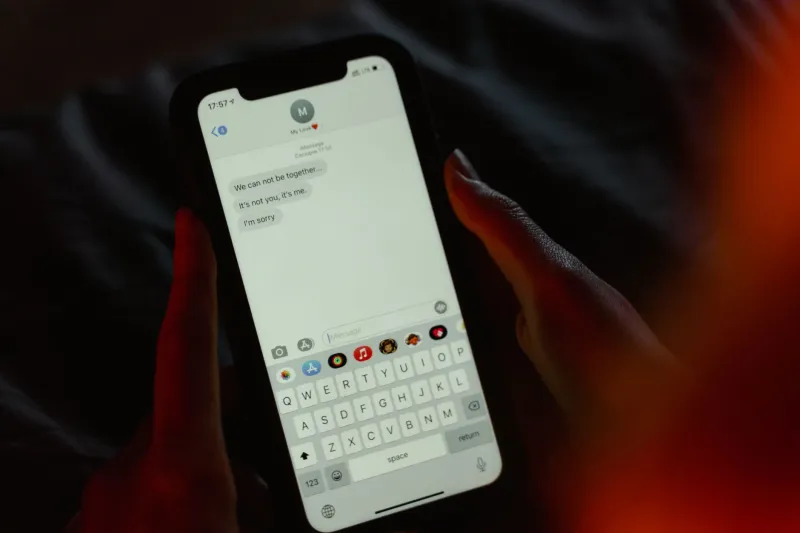
I have written a lot of grand gestures. I have written heroes who sprint through airports, heroes who buy the last available copy of a book, heroes who show up in the rain with a speech so good it should come with a soundtrack. And I love them. I do. But the scene that keeps me up at night — the one I reread in my own drafts like a lovesick weirdo — is usually quieter. Smaller. A thumb hovering over a send button. A message that never leaves the phone.
The unsent text is my favorite love scene. Not because it's tragic, although it can be. Not because it's tidy, although it is. It's because it is the most honest thing a character can do. A spoken confession can be rehearsed. A grand gesture can be staged. But a text drafted at 1:47 a.m., reread six times, and deleted? That is pure, uncut yearning. That is the emotional equivalent of holding someone's face in your hands and then remembering you have to be normal at brunch.
The Scene That Lives in the Drafts Folder
Here's what I tell writers who ask me why their third-act confession feels flat: the confession isn't the scene. The scene is everything the character almost said first. The unsent text is where you show the gap between what your hero feels and what he is willing to risk. It's a pressure cooker. It's a lit match held under a fire alarm. It's the moment before the moment, and romance readers live for the moment before the moment.
In my own drafts, the unsent text almost never makes it to the page in full. I'll write three versions, delete two, and keep the one that sounds like it was typed with shaking hands. Then I'll cut it down to one line. That line usually ends up in the final book, but it arrives with a whole graveyard behind it. That graveyard is the point. The reader doesn't need to see every draft. They need to feel that one existed.
Anatomy of a Devastating Unsent Text
After years of writing these little emotional land mines — and after a truly unhinged amount of reader feedback — I've decided there are three ingredients that make an unsent text land.
Timing. A 3 p.m. text is a decision. A 3 a.m. text is a confession. The unsent text works best when it's typed at an hour that makes the sender feel invincible and the receiver feel like a rumor. It's not about being drunk. It's about being tired enough to stop performing. That's when the truth slips out.
Typos. A clean unsent text is suspicious. It's trying too hard. I want the lowercase i, the missing apostrophe, the word 'definitely' spelled three different ways in one sentence. A typo says: I was typing fast because I was feeling fast. It says: I didn't edit this for you. I barely edited it for me. In 2026, when we can edit, unsend, and disappear a message before the other person even opens the app, a typo is a relic. It's a fingerprint. It's proof of life.
Vulnerability without punctuation. The best unsent texts don't ask for anything. They don't end with a question mark. They don't say 'thoughts?' They say something like 'I saw the dog you adopted. He looks like he's judging me. Anyway.' Or 'You left your hoodie. I'm not giving it back. That's not a threat, it's a lifestyle.' The period is doing a lot of work. The period is the villain. The period is the hero. The period is the reason I have to lie down.
What 2026 Did to Yearning
We have more ways to communicate than ever, and somehow we have never been more fluent in silence. Read receipts turned the unsent text into a high-stakes game of chicken. Typing bubbles are their own form of foreplay. The 'delivered' notification is a tiny heartbreak. The edit history is a paper trail of regret. And the unsend button? The unsend button is a gift and a curse. It lets you take it back, which means every sent text now carries the ghost of the one you almost sent instead.
Dating apps have changed the rhythm, too. We swipe, we match, we draft a reply, we overthink the reply, we close the app, we open the app, we draft a new reply, we close the app again. The unsent text used to be a private ritual. Now it's a social behavior. We all have a drafts folder that reads like a poetry chapbook written by someone who needs a nap and a hug.
And honestly? I think it's made romance hotter. Because the unsent text is where desire goes to pace. It's where the character gets to want something without being brave enough to ask for it. That's not cowardice. That's tension. That's the thing readers turn pages for.
My Own Deleted Greatest Hits
I keep a note on my phone called 'Do Not Send.' It is exactly what it sounds like. It is also, embarrassingly, the most romantic thing I own. There's a line in there about a person's laugh sounding like a screen door in summer. There's one about wanting to be someone's second choice only if the first choice is a nap — okay, that one is less romantic and more relatable. There's a message I typed to a friend after a book deadline that just says 'I miss you in a way that feels rude.' That one still works. I might put it in a book.
The best unsent texts are the ones that admit something without asking for a response. They're little acts of bravery dressed up as restraint. They're the emotional equivalent of leaving a light on. You don't know if anyone will come home, but you keep it on anyway.
Reader Callout: Show Me Your Worst (Best) Unsent Text
This is where you come in. I want to hear the most devastating unsent text you've ever written. Not the one you sent. The one you didn't. The one that lives in your drafts folder like a houseplant you keep forgetting to water but can't throw away. Share it in the comments or send it to me through the contact page. You can change the names. You can change the dog. You can absolutely change the ending.
I'll be reading every single one and taking notes. Not because I'm stealing them — okay, maybe a little — but because I want to know what yearning sounds like in 2026. What are we almost saying? What are we deleting? What are we keeping for ourselves?
Why I'll Keep Writing Them
The unsent text is not a cop-out. It's a choice. It's a character deciding that the feeling is real even if the message isn't ready. That's the kind of romance I want to write. Not the kind where everything gets said perfectly. The kind where everything gets felt first.
So the next time you read one of my heroes staring at his phone like it owes him money, know this: he's not being dramatic. He's being human. And somewhere in a drafts folder, there's a version of him that hit send. That's the version I'm writing toward. That's the happily ever after. That's the scene.